
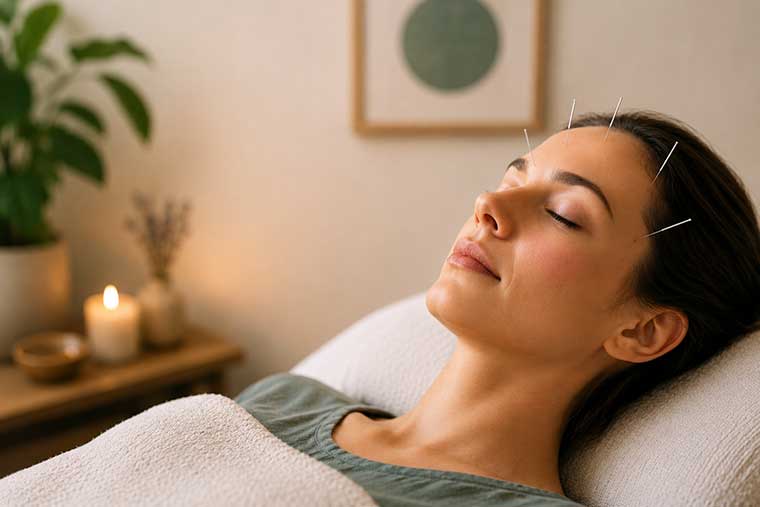
How Acupuncture Helps Relieve Stress and Anxiety
If you’ve been feeling overwhelmed, wired but exhausted, or like your nervous system is stuck on high alert — you’re not alone. Chronic stress and anxiety are some of the most common reasons people in Eugene seek out acupuncture, and for good reason. There’s a growing body of research showing that acupuncture does more than help you relax in the moment — it actually works on the underlying physiology driving your stress response.
Here’s a closer look at what’s happening in your body when you’re stressed, how acupuncture addresses it, and what to expect if you decide to give it a try.

What Stress Actually Does to Your Body
Stress isn’t just a feeling. It’s a full-body physiological event.
When your brain perceives a threat — a work deadline, a difficult conversation, financial pressure, or even a packed schedule — it triggers your hypothalamic-pituitary-adrenal (HPA) axis to release cortisol, your primary stress hormone. At the same time, your sympathetic nervous system (the “fight or flight” side) kicks into gear: heart rate goes up, muscles tighten, digestion slows, and your immune system gets deprioritized.
This is a brilliant short-term survival mechanism. The problem is that modern life keeps the switch flipped on. Chronically elevated cortisol contributes to anxiety, poor sleep, weight gain, immune suppression, high blood pressure, and hormonal disruption. Many people walk through the door of our Eugene clinic not realizing how much their body has been running in overdrive.
How Acupuncture Regulates the Nervous System
Activating the parasympathetic nervous system. Acupuncture the nervous system to downshift — moving from sympathetic “fight or flight” toward parasympathetic “rest and digest.” Research using heart rate variability (HRV) monitoring — a reliable marker of autonomic nervous system balance — has shown that acupuncture modulates HRV more effectively than placebo, supporting both physical and mental well-being. (Hamvas et al., Complementary Therapies in Medicine, 2023)
Lowering cortisol. Multiple clinical studies have found that acupuncture at specific points — including ST 36 (Zusanli), HT 7 (Shenmen), and SP 6 (Sanyinjiao) — produces significant reductions in salivary and serum cortisol. Some studies have documented cortisol reductions approaching 30% following treatment.
Releasing endorphins and calming neurochemicals. Acupuncture is well-documented to stimulate the release of endorphins, the body’s natural pain-relieving and mood-elevating chemicals. It also influences the GABA receptor system — the same system targeted by many anti-anxiety medications — which helps quiet an overactive nervous system.
Supporting the vagus nerve. The vagus nerve is a major pathway of the parasympathetic nervous system and plays a central role in regulating anxiety and emotional resilience. Recent research has explored acupuncture’s ability to activate vagal tone as one of its key mechanisms for reducing generalized anxiety.
What a Typical Acupuncture Visit Looks Like
If you’ve never had acupuncture, the idea of needles might feel intimidating. Most patients are surprised by how comfortable — and genuinely relaxing — the experience is.
Your first appointment at our Eugene clinic starts with a conversation. We’ll ask about your symptoms, what’s driving your stress, your sleep, your energy levels, and how stress is showing up physically in your body (tight shoulders? digestive upset? headaches?). This intake helps us tailor a treatment specific to you — acupuncture isn’t a one-size-fits-all protocol.
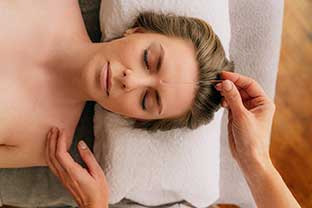
During treatment, you’ll lie comfortably while very fine needles are placed at selected points — often on your wrists, lower legs, feet, or scalp for stress-related presentations. The needles are retained for about 25–40 minutes. Most people feel a mild heaviness or warmth at the needle site initially, then settle into a deeply relaxed state. It’s genuinely common to doze off.
After treatment, patients typically describe feeling calm, clear-headed, and lighter — sometimes for the first time in weeks. That effect tends to build with regular sessions. We generally recommend starting with weekly appointments for four to six weeks to establish a foundation, then tapering based on how you’re responding.
Is Acupuncture Right for You?
Acupuncture for stress and anxiety is a good fit for people who:
- Feel chronically overwhelmed, anxious, or burned out
- Are having trouble sleeping due to a busy or worried mind
- Experience physical symptoms of stress — tension headaches, tight muscles, digestive issues, heart palpitations
- Want to support their mental health with a non-pharmaceutical option
- Are already using therapy or medication and want complementary support
Many of our patients come to us through medical referrals, but acupuncture for stress and anxiety doesn’t require a referral. You’re welcome to call and ask whether it might be a good fit before scheduling.
If you’ve been carrying too much for too long, your nervous system may simply need help finding its way back to baseline. That’s exactly what acupuncture is designed to do.
Why Eugene Patients Are Choosing Acupuncture
Eugene has always been a community that values thoughtful, whole-person approaches to health. More and more local patients are turning to acupuncture not as a last resort, but as a first line of support — for pain, stress, sleep, immunity, and beyond. Whether you’re dealing with a specific health concern or simply want to feel more like yourself, acupuncture offers a gentle, research-backed path forward.
We’d love to be part of your wellness journey. Reach out today to book a consultation and find out which benefits matter most for you.
Quick Links for More Information
Concussion
Deep Tissue
Oncology